Mapúa MCL Champions Sustainability Education to Develop the Next-Generation Green Workforce
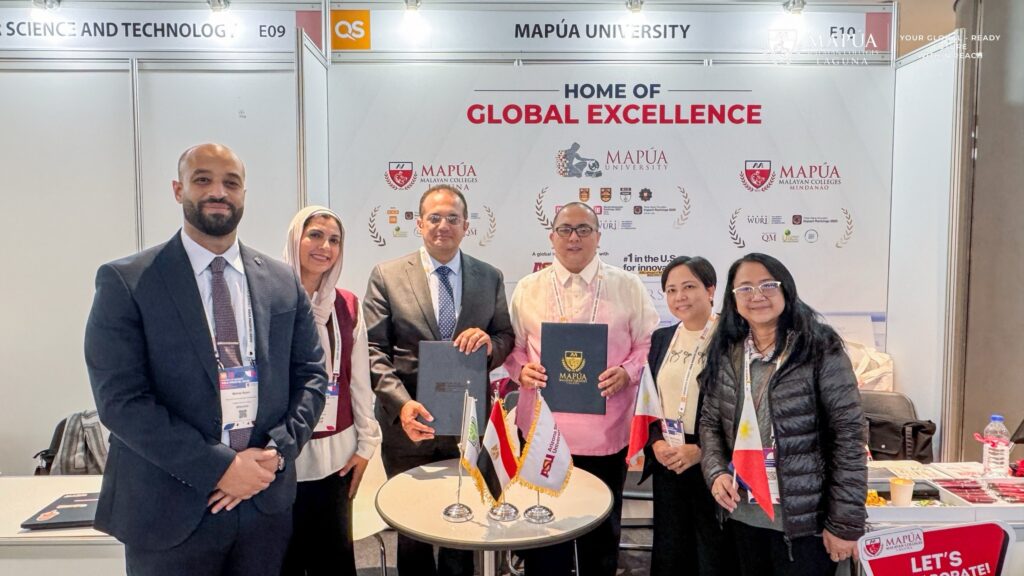
Mapúa Malayan Colleges Laguna (Mapúa MCL) placed sustainability education front and center during the recently held QS Spotlight Sessions: Sustainability in Higher Education. The event gathered university leaders from across the Asia-Pacific to highlight sustainability initiatives, exchange best practices, and strengthen collaborations among higher education institutions.
During the session, Mapúa MCL led the discussion titled “From Classroom to Green Workforce: Embedding Sustainable Building Standards into Higher Education for Green Talent Development.” The presentation underscored the school’s commitment to cultivating sustainability-driven education, building environmentally responsible campuses, and preparing students for future-ready green careers.
Representing Mapúa MCL were Professor James Ronald O. Mesina, Vice President for External Linkages, Internationalization, and Transnational Education, and Ms. Ivana Ruth C. Vidal, Program Associate for Strategic Partnerships and Global Engagement. They were joined by Engr. Maribel G. Songsong, Vice President for Academic Affairs.
Mesina and Vidal explained that Mapúa MCL’s Green Curriculum Integration ensures sustainability concepts are embedded throughout academic programs and co-curricular activities—aiming to produce graduates who are fully equipped to join the green workforce.
“Green talents—the future green workforce—are professionals who possess the knowledge, skills, and values needed to advance sustainability,” Mesina noted. “These include understanding environmental systems and principles, applying energy-efficient and resource-smart solutions, and upholding ethical and global citizenship standards.”
Mapúa MCL’s Green Curriculum Integration Model focuses on applied and experiential learning, faculty upskilling, outcomes-based education (OBE), and curriculum mapping. According to Vidal, this approach ensures that students’ capstone projects incorporate energy and resource efficiency goals, with Architecture and Engineering students working together on real-world sustainability challenges.
The institution continues to align its academic leadership with key United Nations Sustainable Development Goals (SDGs)—including SDG 4 (Quality Education), SDG 9 (Industry, Innovation, and Infrastructure), SDG 11 (Sustainable Cities and Communities), and SDG 13 (Climate Action). This alignment is reinforced through continuous faculty development, sustainability-focused research, and collaboration with local and international partners.
Vidal emphasized that faculty at Mapúa MCL undergo regular training on sustainability teaching methods and assessments. Faculty research is also encouraged to align with the SDGs to ensure institutional support.
Through partnerships with sustainability-centered companies and organizations, students gain hands-on exposure via internships, research collaborations, and industry mentorship.
The presentation highlighted measurable impacts of sustainability education at Mapúa MCL: graduates equipped with industry-ready sustainability competencies, faculty with stronger expertise in sustainability instruction, and enhanced partnerships that support long-term environmental goals.
“At Mapúa MCL, sustainability is not just a subject—it’s a lived commitment,” Mesina concluded. “By integrating green standards into education, we prepare professionals who will design, innovate, and lead a more sustainable future.”
Learn more about Mapúa MCL’s sustainability initiatives at mcl.edu.ph.
- The Courage to Start Again - September 26, 2026
- CARD MRI Hijos Tours unveils ‘Isla at Pamana’ heritage tour in Western Visayas - September 26, 2026
- CARD MRI recognized by Kenya’s CIC Insurance Group for advancing microinsurance - September 26, 2026